Sunday, October 2, 2011

Staking Tomatoes- Florida Weave


This year we staked all of our tomatoes with the Florida Weave technique and it's been my favorite way to stake the tomatoes so far as it uses less T stakes and it keeps the walkways clear between the rows of tomatoes.

We used (1) T stake for every two tomato plants, then weaved twine between the plants and stakes. We did a total of three rows of twine (adding a row as the plants grew). Here is a website that gives more detailed instructions.

Thursday, July 7, 2011

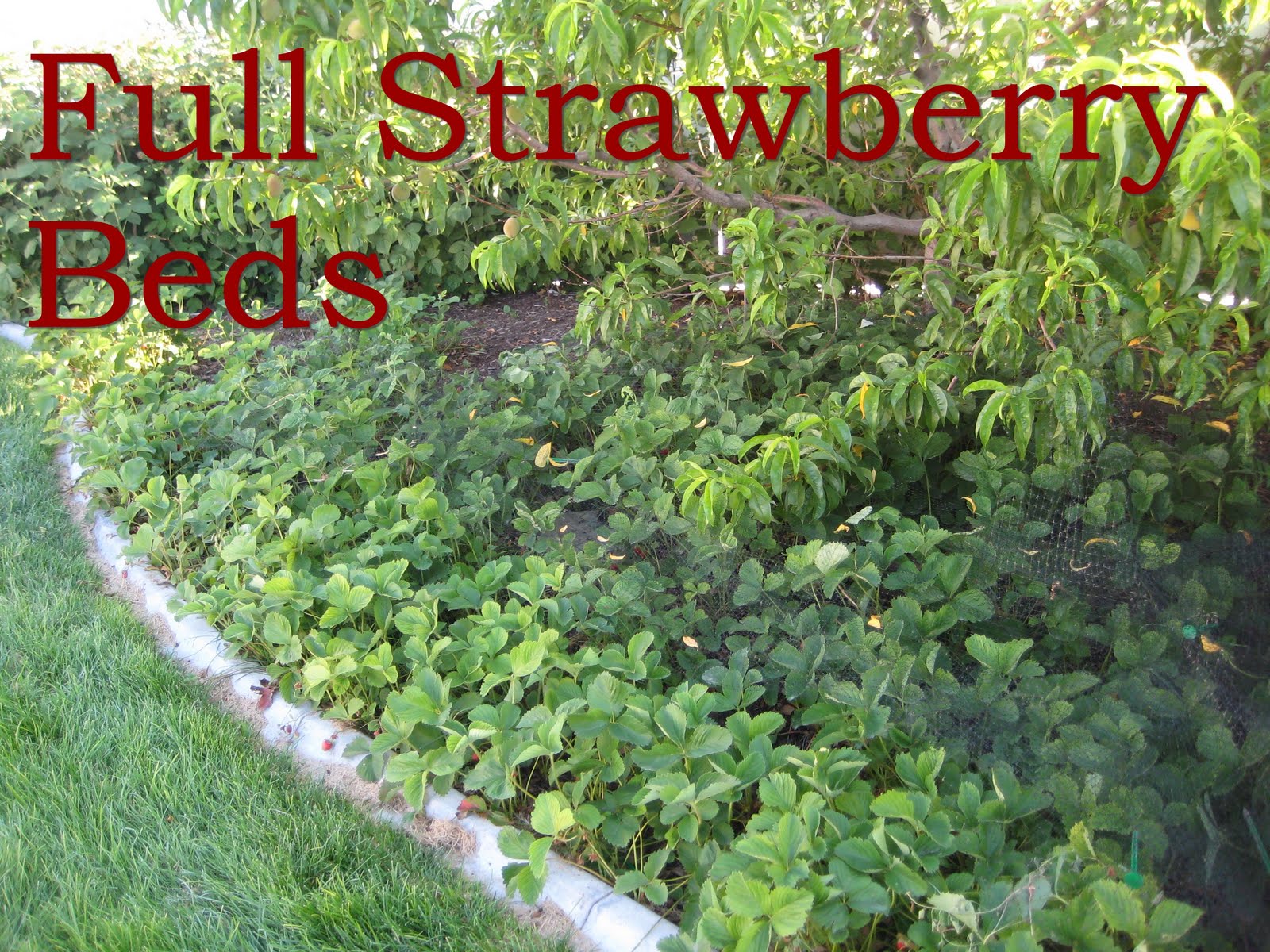
Renovating Strawberry Beds


We were finally able to dedicate some time to our strawberry beds to keep them producing large berries.

Even after ignoring the beds for the past three years they have stilled been amazing producers. This season (2011) averaged 4-5 cups a day at the beginning of the harvest and ended in 10 cups a day during the last week of the harvest with some days as large as 20-30 cups a day. Even with the large crops and large berries, some of the plants are producing small berries this season so it time for renovating the bed.

Here is what we did this year and hope to continue doing each season.

1. Immediately after harvest (within one week of picking the last berry and no later than July 15), trim leaves within 3” of the crown. Remove cut leaves and debris from bed. This can be done by mowing the strawberry patch with a mower set to it's highest setting.

2. Remove old/mature plants, leaving the new daughter plants. Space plants 8” apart in 3 foot wide rows. As the daughter plants fill in through the summer the rows will end up being 2 feet apart. We could have thinned ours even more but after pulling out a few hundred plants we decided we were done for now.

3. Fertilize with a 10-10-10 mixture.

Iowa State’s extension service
is a great resource for more details on renovating strawberry beds to keep them producing large healthy crops.

Friday, July 1, 2011

Preserving Carrots


When harvesting carrots, we generally have too many to eat fresh. We chop and freeze many for soups. We also use carrot juice to add to smoothies, so we juice all of our extra carrots and freeze in ice cube trays. Once frozen, we place the frozen cubes in quart size bags to later add to smoothies.

Monday, June 27, 2011

Gardening with kids


I’ve found the more my daughter is involved with gardening and cooking in the kitchen, the more willing she is to try new foods, experiment with flavors and sample new combinations. The more she learns about fruits and vegetables, the more excited she is when they are ready to harvest.

Just over a year ago I made this felt playhouse for my daughter to have her very own garden year round to plant and harvest. It has been a huge hit! It gets the most attention out of everything in the playroom when friends come over. Hours are spent planting, picking, washing and eating. I love that my daughter and her friends get so much enjoyment from planting potatoes and picking apples from the tree.


My inspiration for this project came from this incredible blog.

Saturday, June 25, 2011

Gardening Companions- Lettuce and Tomatoes


Space is always tight in our garden and each year I try to find new ways to get the biggest crop from our small garden.

This year our tomatoes and lettuce are sharing a raised bed together and I've loved how it has worked out! While the tomato plants are still small, the lettuce and spinach are flourishing. Once the tomato plants crowd out the lettuce it will be about the time the weather gets too warm for lettuce.

I have read that tomato plants will shade the lettuce as the weather warms up helping to extend the harvesting time of lettuce and spinach. We'll see how it goes.


Dinner tonight
: Balsamic vinegar chicken salad with fresh strawberries, lettuce and spinach from the garden.

Tuesday, June 14, 2011

Honeoye Junebearing Strawberries


My 3 year old daughter divides the year into two sections- when strawberries are growing in the backyard and when she is waiting for the strawberries to start growing. She is in heaven starting late May when these berries appear and sheds a few tears at the end of June when the crop finishes. Then the long wait begins until they arrive next spring.

She has renamed these berries as "sweetie-sweets" as they are so sweet compared to the store varieties. When you place grocery store varieties side by side to home grown berries, they really can't compare.

The Honeoye variety sold from Gurneys is our favorite as they are a large, extra sweet, deep red berry. We have had them for several years and they still produce a large berry with a yield of 3-4 cups a day for 5-6 weeks. We started with 4 varieties of berries and loved the Honeoye so much, we ripped out the other 3 varieties and have stayed loyal ever since.

They are amazing fresh, fantastic frozen and make a great jam.


Average crop when we pick every other day (minus how many we eat while picking):

Thursday, June 9, 2011

Hoop Houses


A few years ago we added mini hoop houses to cover our raised garden beds. They add about 6 weeks to the growing season in the spring and if you put them back on in the fall they can extend the end of the growing season by several weeks as well.

We made the hoops from flexible electrical PVC pipe. We connected a galvanized steel pipe strap to the sides of our raised beds and threaded the PVC pipe through the straps to hold them in place. This also makes the pipe easy to remove once the weather warms up.

We then covered the mini hoop houses with 6 mil (heavy) clear plastic. The plastic is sold in long rolls in the painters section of a home improvement store. The plastic is held in place with A clamps.

These mini hoop houses have made it possible to start our garden several weeks earlier and protect the tender plants from strong winds and storms.

The biggest challenge of these hoop houses is to find a balance of not exposing the tender plants too much to the cold air of early April, but venting them enough that they don't get too hot inside. This has only been especially challenging on a very sunny but frigid cold day where the temperature is 30 F but it's so sunny the hoop house gets too hot inside. I generally lift up the plastic 2-3" on each side by 9am to allow air flow, then close them at night.

As the weather warms up, I open the sides more and more. Then by mid May I remove the covers during the day and only cover at night if the temperature is predicted to drop too much.

Overall we have been so happy with these covers and they have made it possible to plant and harvest much earlier.